Insights / Framework · Brownfield
Unlocking Middle East Brownfields: The Early-Phase Decisions That Make or Break a Project
Lessons from 50+ early-phase projects on mature and new onshore assets: the decisions that set a brownfield project's outcome before FEED.
(Insights from delivering 50+ early-phase projects across mature and new onshore assets)
In the Middle East, as well as other places - many project failures start long before FEED. The real challenges arise not from detailed engineering, but from weak early-phase definition, unverified assumptions, and insufficient integration between subsurface, wells, and facilities.
After 17+ years working on brownfield and greenfield concept development, I’ve repeatedly seen how structured FEL1–FEL2 discipline transforms both cost and execution risk - often removing 15-30% of scope before FEED even begins.
Here are the areas where FEL1–FEL2 consistently strengthens project outcomes supported by examples from my own experience.
1. Rising Water-Cut and PWRI Constraints as the Primary Production Limiter
Water-cut in mature carbonate reservoirs increases by 3–7% annually, significantly intensifying the load on the water-handling system and PWRI capacity.
How Concept Engineering Helps:
- Analyzing the balance between produced and injected water
- Modelling the full water-gathering and injection (PWRI) system, with subsurface–surface integration where required
- Identifying and ranking sections for looping/replacement; selecting locations and configurations for booster pump installations
- Ranking high-WC wells for shut-in or non-restart, considering local infrastructure constraints
- Reducing unnecessary long-distance water transfer (via DHP and modular/block solutions)
- Optimizing the distribution of produced water and external make-up water to maintain -or approach - VRR targets
- Evaluating the economic efficiency of the proposed measures
Effect:
- Removal of production constraints
- Stabilization of water-cut
- Stabilized liquid offtake
- Improved oil recovery
- Reduction in power consumption
- Reduction in chemical usage (corrosion and demulsifier)
- Reduced corrosion (transfer emulsion from oil in water to water in oil if keep WC less 50%, like after DHP; maintain a turbulent flow regime)
- All that Improved OPEX / Unit Operating Cost (UOC)
In one major water injection system re-engineering project, reframing the concept around actual, sustainable water availability (instead of theoretical targets) led to an 80% CAPEX reduction and removal of duplicated scope originally carried into FEED planning.
This is exactly the type of misalignment FEL1–FEL2 is meant to detect early.
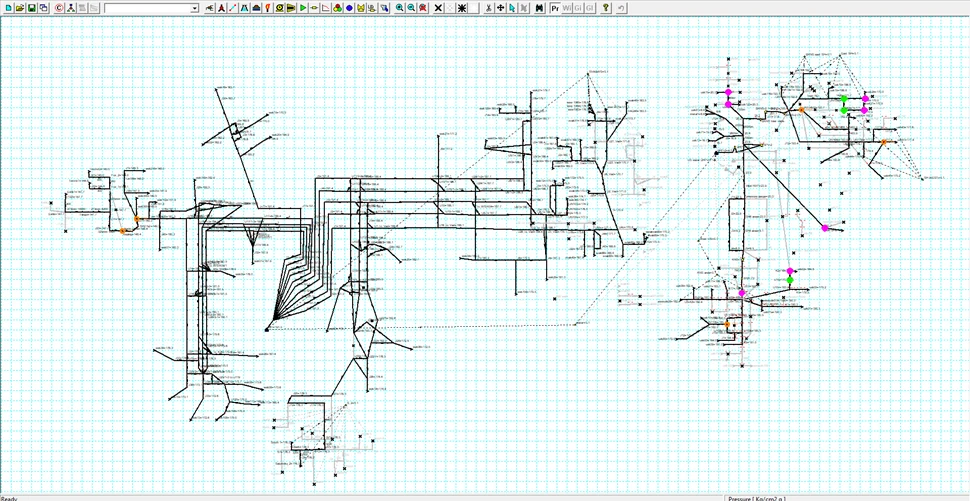
2. Bottlenecks in Processing Systems (Separation, Heating, Compression)
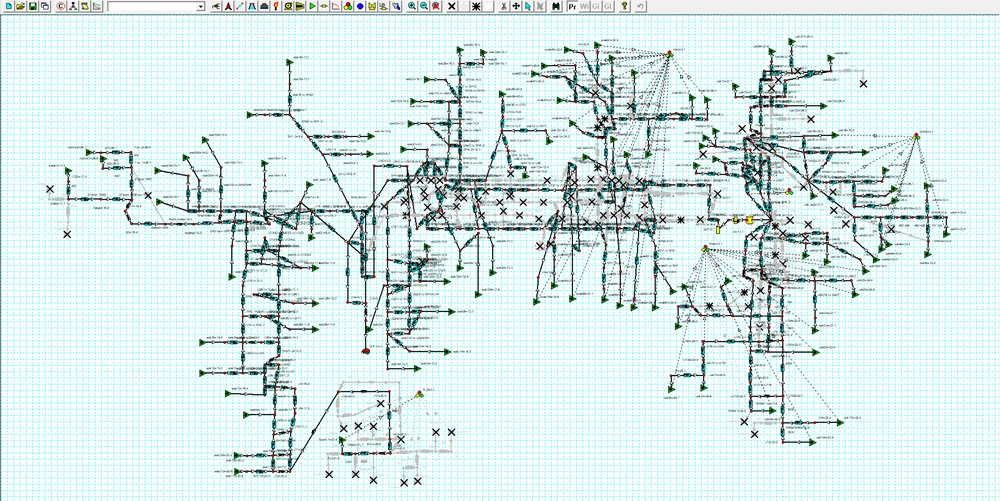
Equipment on brownfield facilities often operates at or above its design limits (UF > 95%). Shutdown windows are limited, making modifications difficult.
How Concept Engineering Helps:
- Developing detailed thermal and material balances
- Building choke/flow models to identify bottlenecks
- Proposing debottlenecking solutions (packages, modules, new lines, etc.)
- Optimizing facility process flow schemes
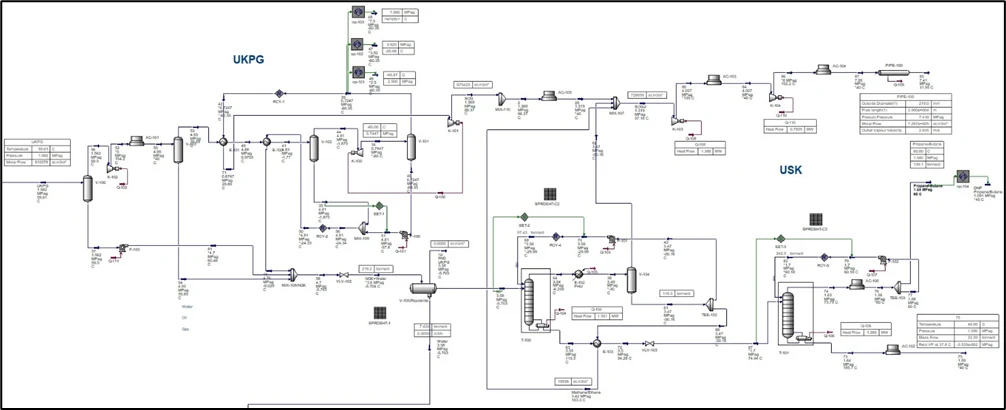
- When plot space is constrained, developing measures to offload all or part of the inlet stream (water or gas), such as DHP with PWRI or an Initial Gas Separation Unit, including modular options
Effects:
- Increased UF, reduced equipment downtime, and improved capacity availability
- Lower power consumption
- Reduced chemical usage
- Improved UOC (OPEX) and/or UDC (CAPEX) performance
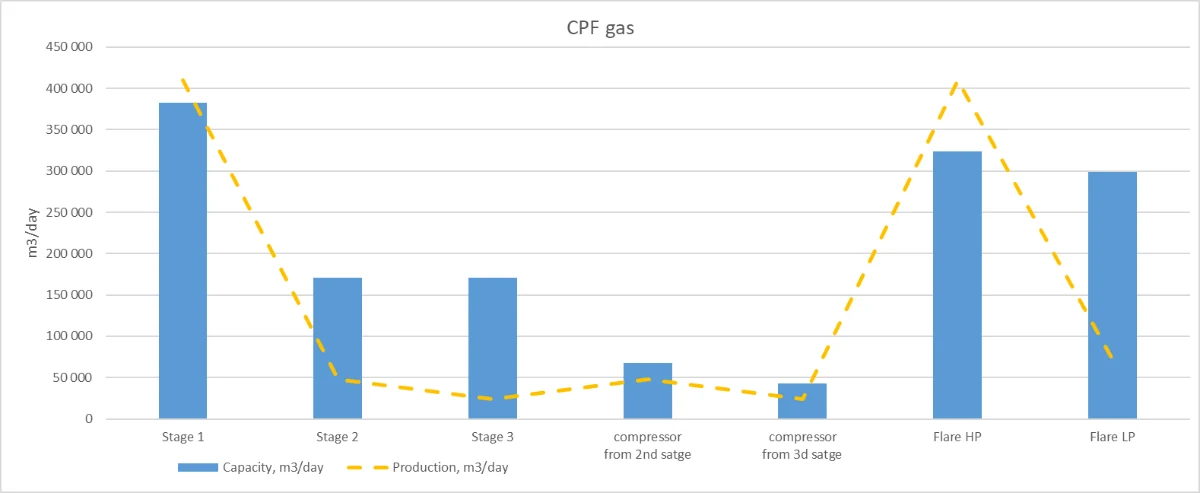
3. Flare reduction and gas handling must be solved at concept stage
Flaring reduction is a regional priority; however, in many Middle East brownfield developments, gas-handling considerations were introduced too late—or the projects themselves were originally designed under different regulatory, economic, and technological conditions. As a result, decisions made years ago are often judged unfairly.
It’s natural that professionals who were not directly involved in earlier stages of an asset’s life may interpret past design decisions without the full context of the regulatory, technological, and commercial conditions that existed at the time.
Common consequences:
- scope growth during FEED
- oversized or undersized compression
- flare penalties
- delays in approvals
- costly EPC rework
How Concept Engineering Helps:
- Defining boundary conditions for the associated gas (APG) management scheme
- Assessing the balance of gas production, consumption, and flaring
- Analyzing the existing gas utilization/monetization scheme
- Assessing the market for gas processing and gas-derived products
- Evaluating power generation requirements or power export opportunities
- Proposing improvements to the current scheme or identifying additional gas utilization/monetization options
- Defining scope of work, implementation schedule, and cost estimates for each option
- Screening and subsequently conducting detailed comparison of shortlisted economic scenarios
- Recommending the optimal scenario and defending it at the revisory board
Effect:
- Reduction of associated gas flaring
- Increase in associated gas monetization (value creation)
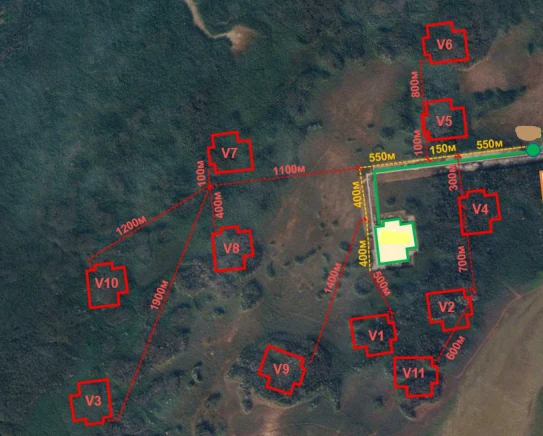
4. Pad locations, routing corridors, and early layout decisions drive 40–50% of CAPEX
Across many well pad and gathering system projects I ran, the majority of CAPEX variation stemmed not from equipment selection but from layout, routing, drilling trajectories and corridor decisions made (or skipped) at FEL1–FEL2.
With structured early-phase alignment, we consistently achieved 10%–50% CAPEX savings per pad, often by:
- optimizing pad placement based on subsurface constraints
- rerouting flowlines to avoid congested brownfield areas
- eliminating unnecessary long-distance corridors
- integrating surface and subsurface parts (involvement experts from geology, development, drilling, legal, finance, etc.
Effect:
- Improved UDC (CAPEX) performance
- Reduced material requirements, reduced burden on logistics and the construction contractor
These optimizations are nearly impossible to implement once FEED has progressed.
5. Strong FEL delivery reduces FEED/EPC rework by 25–40%
Operators in Iraq, UAE, Oman, and Kuwait consistently report the same pattern: Projects entering FEED with weak concept definition suffer massive variation, schedule slippage, and late technical discovery.
Across my portfolio, the largest project gains came not from “engineering harder,” but from:
- eliminating unnecessary scope
- right-sizing injection and water handling systems
- optimizing gathering networks
- avoiding high-risk brownfield tie-ins
- clarifying gas handling strategy early
- improving alignment between subsurface and surface
- identifying of an adequate level contingency and technical allowances
Effect:
- Improved UDC (CAPEX) performance
- Reduced material requirements, reduced burden on logistics and the construction contractor
Good FEL1–FEL2 doesn’t slow a project — it accelerates it by preventing rework.
6. Greenfield projects need FEL discipline just as much as brownfield
While brownfield appears more complex, greenfield projects in GCC and Iraq face their own early-phase risks:
- uncertain plateau levels
- CPF / GOSP sizing assumptions
- power and gas handling strategy
- water handling requirements
- corridor availability and land constraints
- contingency-heavy early scoping
FEL1–FEL2 stabilizes these variables through:
- structured option screening
- basis of design clarity
- realistic production and injection scenarios
- formation of a long-term asset architecture
- early cost-risk balance
This prevents overdesign — a common problem in regional greenfield projects driven by conservative assumptions.
Conclusion
Whether it is a brownfield water injection upgrade in Iraq, a greenfield gathering network in Oman, or a capacity expansion in the UAE, the pattern is the same:
- Most of the value and most of the risk are locked in at FEL1–FEL2, not in FEED.
- Water, gas, routing, and brownfield constraints are system issues, not local “equipment problems.”
- Strong early-phase integration between subsurface, wells, and facilities is the only reliable way to avoid expensive surprises.
- Early, well-grounded contingency and technical allowances protect the project budget as uncertainties decrease through each stage gate.
Concept engineers are strong candidates for Digital Oil Field and Oil Field Twin projects due to their holistic, system-level understanding.
For the Middle East - where water scarcity, flaring commitments, and aging infrastructure define the operating context - early-phase is not a luxury. It is the difference between a predictable project and an expensive one.
APPENDIX
Example: Stepwise Development of a Remote Field (google disk). Representative scenario can to be used on GCC brownfields.
#ConceptEngineering #FEL1 #FEL2 #BrownfieldOptimization #OilAndGasDevelopment #MiddleEastEnergy #FacilitiesEngineering #SubsurfaceIntegration #PWRI #FlaringReduction #GasHandling #ProductionOptimization #FieldDevelopment #FEED #EPC